



Estimated reading time at 200 wpm: 11 minutes
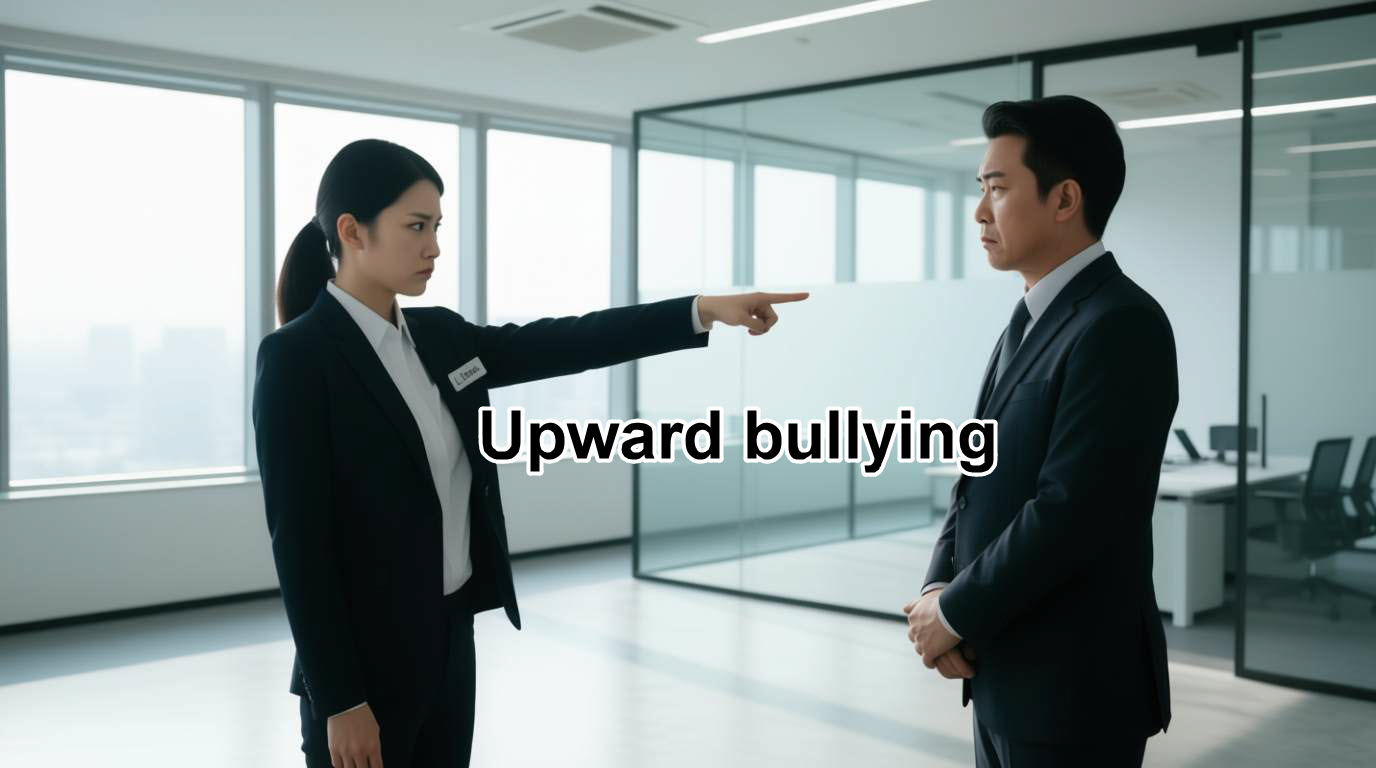
When people speak of ‘bullying’ at the workplace unknowingly they are referring to one type of bullying, called “downward bullying.” This is where a person in a position of authority abuses their power usually to suborodinate workers or those are a similar level. A growing body of evidence suggests that bullying can also flow in the opposite direction. This phenomenon, known as “upward bullying,” occurs when subordinates engage in repeated aggressive or disrespectful behaviours towards their superiors, undermining their authority and creating a hostile work environment. This article explores the concept of upward bullying, its definitions, contributing factors, group dynamics, and potential impacts on individuals and organisations. 1.
Whether or not you agree our Fat Disclaimer applies
Defining Upward Bullying [UB]
Upward bullying, also known as subordinate bullying, is characterised by repeated acts of aggression or disrespect directed by one or more subordinates towards their manager or someone in a more senior role2. It is important to distinguish upward bullying from constructive feedback or legitimate grievances. Upward bullying involves a pattern of behaviour intended to harm, intimidate, or undermine the manager’s authority, rather than to address genuine concerns or improve work processes3.
Some definitions of workplace bullying require the behaviour to occur repeatedly over a long period and involve a power imbalance where the target has difficulty defending themselves4. It can occur face-to-face, on social media, in emails, or calls, and can happen at work or in other work-related situations5.
| Source | Definition |
|---|---|
| 3 | Repeated behaviour directed at a manager by a subordinate that is intended to cause physical, social and/or psychological harm. |
| 2 | Bullying by an employee or group of employees towards their immediate manager, or someone in a more senior role. |
| 6 | Bullying by a member (or members) of staff towards their manager. |
These descriptions highlight the key elements of upward bullying: a target who is a manager or someone in a position of authority; a perpetrator who is one or more subordinates; repeated acts of aggression, disrespect, or undermining; and an intent to cause harm or damage to the target.
Circumstances and Contexts Conducive to Upward Bullying
Upward bullying can arise from various individual, relational, and organisational factors. Studies indicate that certain circumstances and contexts may increase the likelihood of upward bullying:
Organisational Factors:
- Organisational change: When an organisation undergoes significant change, such as restructuring, downsising, or a change in leadership, employees may feel insecure or resentful. This can create an environment where upward bullying is more likely to occur, as employees may direct their frustration or anxiety towards their managers7.
- Role ambiguity: When roles and responsibilities are not clearly defined, it can create confusion and power struggles. Subordinates may exploit this ambiguity to challenge their manager’s authority or undermine their decisions3.
- Cultural factors: A workplace culture that tolerates or even encourages incivility and disrespect can create a breeding ground for upward bullying3.
- Technology: The rise of electronic communication and digital platforms has made it easier for employees to connect and coordinate their actions, potentially facilitating upward bullying through online forums, social media, or group messaging6.
Individual Factors:
- Perceived injustice: If employees feel they have been treated unfairly or that their contributions are not valued, they may resort to upward bullying as a way to express their frustration or seek retribution3.
- New managers: Managers who are new to an organisation or a leadership role may be perceived as less experienced or less powerful, making them easier targets for upward bullying6.
- Direct supervisors: Direct supervisors appear to be more vulnerable to being bullied compared with middle and senior management1. This may be because they are more accessible to subordinate staff and have less formal power than higher-level managers.
- Gender: Evidence shows that gender can play a role in upward bullying8. Some team members may not recognise the legitimacy of a female boss, leading to hostility and bullying.
Relational Factors:
- Power struggles: Informal power dynamics, such as social alliances, specialised knowledge, or access to information, can empower subordinates to challenge their manager’s authority3.
- Managerial isolation: When a manager is geographically isolated from their peers and superiors, or when they lack support from higher management, they become more vulnerable to upward bullying7.
Group Dynamics in Upward Bullying
Upward bullying is often a collective phenomenon, with a group of subordinates engaging in coordinated efforts to undermine their manager2. This can create a “mob mentality” where individuals feel emboldened by the support of their peers and less accountable for their actions6.
Several factors contribute to the dynamics of group upward bullying:
- Shared grievances: A group of employees may share a common grievance against their manager. For example, if a team feels that their manager consistently overloads them with work without providing adequate support or recognition, this shared frustration could contribute to a climate of resentment and potentially lead to upward bullying.
- Social influence: Individuals within the group may influence each other’s perceptions and behaviours, reinforcing negative attitudes towards the manager and encouraging participation in bullying.
- Diffusion of responsibility: When a group is involved in bullying, individuals may feel less personal responsibility for their actions, as they can attribute blame to the group as a whole.
- Anonymity: Technology can provide a sense of anonymity, making it easier for individuals to engage in bullying behaviour without fear of being identified or held accountable.
How Groups of Subordinates Engage in Upward Bullying
Groups of subordinates may employ various tactics to engage in upward bullying:
| Tactic | Description | Example |
|---|---|---|
| Withholding Information | Deliberately withholding critical information from the manager to hinder their decision-making and undermine their effectiveness. | A team might withhold information about a project’s progress, causing the manager to appear uninformed or unprepared in meetings with senior management8. |
| Spreading Rumours and Gossip | Creating and disseminating negative rumours or gossip about the manager to damage their reputation and erode their credibility. | Subordinates might spread rumours about the manager’s personal life or professional competence, creating a climate of distrust and suspicion8. |
| Constant Criticism and Undermining | Continuously criticising the manager’s decisions, leadership style, or competence to create a hostile and demoralising environment. | Team members might constantly question the manager’s judgment in meetings or make sarcastic comments about their leadership abilities8. |
| Public Disrespect | Openly challenging or defying the manager’s authority in front of others to undermine their leadership and create a sense of chaos. | Subordinates might openly contradict the manager’s instructions in team meetings or refuse to participate in initiatives they disagree with8. |
| Unrealistic Demands | Making excessive or unreasonable demands on the manager’s time and resources to create stress and overwhelm. | Employees might constantly request the manager’s approval for minor decisions or demand immediate responses to non-urgent requests8. |
| False Accusations | Filing unfounded complaints or grievances against the manager to trigger investigations and damage their reputation, even if the accusations are ultimately dismissed. | A group of employees might collude to accuse the manager of bullying or harassment, knowing that the investigation process itself can be damaging3. |
| Vexatious Complaints | Filing repeated complaints that are found to be without a factual basis to harass and undermine the manager. | An employee might repeatedly submit complaints about minor issues or perceived slights, creating a constant stream of negativity and diverting the manager’s attention from their core responsibilities3. |
| Insubordination | Refusing to follow instructions, meet deadlines, or comply with rules to disrupt workflow and undermine the manager’s authority. | Team members might consistently miss deadlines or arrive late to meetings without valid reasons, demonstrating a lack of respect for the manager’s authority8. |
| Cyberbullying | Using electronic communication or social media to harass, intimidate, or spread false information about the manager. | Subordinates might use social media platforms or online forums to make derogatory comments about the manager or share confidential information3. |
Impact of Upward Bullying
Upward bullying can have significant negative impacts on both individuals and organisations. Recall that UB may be perpetrated by single individuals or groups of subordinates.
Impact on Individuals:
Studies have shown that upward bullying can have a profound emotional and psychological impact on managers1. Targeted managers may experience feelings of isolation and have their reputations ruined, even when accusations against them are proven false3. They may also experience:
- Psychological distress: Targeted managers may experience stress, anxiety, depression, and even post-traumatic stress disorder (PTSD).
- Reduced job satisfaction: Upward bullying can lead to decreased job satisfaction, motivation, and commitment9.
- Damage to reputation: False accusations and negative rumours can damage the manager’s reputation and career prospects3.
- Health problems: Stress and anxiety can manifest in physical health problems, such as sleep disturbances, headaches, and digestive issues.
- Turnover: Targeted managers may feel compelled to leave their jobs due to the hostile work environment and lack of support3.
Impact on Organisations:
Upward bullying can be costly for organisations, leading to decreased productivity, increased turnover, and higher healthcare expenses3. Other organisational impacts include:
- Decreased productivity: A hostile work environment and strained relationships can lead to decreased productivity and efficiency3.
- Increased turnover: Loss of experienced managers due to upward bullying can disrupt workflow and increase recruitment and training costs3.
- Damaged morale: Witnessing upward bullying can create a climate of fear and mistrust, negatively impacting team morale and collaboration3.
- Reputational damage: If upward bullying is not addressed, it can damage the organisation’s reputation and make it less attractive to potential employees8.
- Legal risks: In some cases, upward bullying can escalate into harassment or discrimination, potentially leading to legal action against the organisation8.
Addressing and Preventing Upward Bullying
Organisations need to take proactive steps to address and prevent upward bullying:
- Clear policies: Develop and implement clear policies that explicitly address upward bullying and outline the consequences for engaging in such behaviour2.
- Training and education: Provide training to all employees on recognising and responding to upward bullying, emphasising the importance of respectful communication and conflict resolution2.
- Open communication: Create a workplace culture that encourages open communication and provides channels for employees to raise concerns without fear of retaliation7.
- Fair investigations: Ensure that all complaints of upward bullying are investigated fairly and thoroughly, taking into account the perspectives of both the manager and the subordinate(s)7.
- Leadership accountability: Hold senior leaders accountable for creating a positive and respectful work environment and for addressing upward bullying promptly and effectively3. This includes taking upward bullying seriously and avoiding blaming the targeted manager3.
- Zero tolerance: Adopt a zero-tolerance approach to bullying of any kind, regardless of the perpetrator’s position or status within the organisation3.
- Guidelines for managing student bullying: Establish clear guidelines and processes for managing incidents where students have been victims of bullying while on clinical placement9.
- Psychosocial safety climate: Promote a psychosocial safety climate within the organisation, where employees feel safe to speak up about concerns and challenge unacceptable behaviour9.
- Early intervention: Address potentially harmful behaviours early on, before they escalate into more serious forms of bullying4.
- Understanding the stresses on managers: Recognise and address the unique stresses and challenges faced by managers, which can contribute to their vulnerability to upward bullying4. Provide support and resources to managers who are experiencing upward bullying, such as counselling, coaching, or mediation7.
One possible reason for the underreporting of upward bullying is that managers may perceive it as an admission of failure in their management style7. This perception needs to be challenged, and managers should be encouraged to seek support and report upward bullying without fear of negative consequences.
Conclusion
Upward bullying is a complex and concerning phenomenon with the potential to inflict significant harm on individuals and organisations. While it may be less recognised than traditional downward bullying, its impact is no less severe. By understanding the dynamics of upward bullying, recognising the factors that contribute to its occurrence, and implementing effective prevention and intervention strategies, organisations can foster a more respectful, supportive, and productive work environment for all employees.
The research highlights the need for a shift in perspective, recognising that anyone, regardless of their position within an organisation, can be a target of bullying. This requires a comprehensive approach that addresses the root causes of upward bullying, promotes a culture of respect and accountability, and empowers both managers and employees to challenge unacceptable behaviour. Further research is needed to explore the long-term effects of upward bullying, develop more targeted intervention strategies, and evaluate the effectiveness of different prevention programs. By continuing to shed light on this often-overlooked issue, we can create workplaces where everyone feels safe, valued, and respected.
References
- Exploring the enablers, motivators, and triggers of upwards bullying, https://www.tandfonline.com/doi/full/10.1080/02678373.2024.2308826
- How to Deal with Upward Bullying | DavidsonMorris, https://www.davidsonmorris.com/upward-bullying/
- The Boss as a Target: Recognising and Stopping Upward Bullying …, https://pshra.org/the-boss-as-a-target-recognising-and-stopping-upward-bullying/
- Research – The Upward Bully, https://theupwardbully.com/research/
- What bullying is – Bullying at work – Acas, https://www.acas.org.uk/bullying-at-work
- Upward Bullying – The CPD Certification Service, https://www.cpduk.co.uk/news/upward-bullying
- Upward Bullying – BulliesOut, https://bulliesout.com/help-hub/articles/upward-bullying/
- Upward Bullying in the Workplace | Expert HR Consultancy, https://www.fitzgeraldhr.co.uk/upward-bullying/
- Turning the tables: The growth of upward bullying in … – ResearchGate, https://www.researchgate.net/publication/259911709_Turning_the_tables_The_growth_of_upward_bullying_in_nursing_academia_Editorial
- Exploring the enablers, motivators, and triggers of upwards bullying, https://www.tandfonline.com/doi/full/10.1080/02678373.2024.2308826