


Estimated reading time at 200 wpm: 11 minutes
When engaging with health professionals, it is common to encounter clinical terms used to describe presented experiences. These terms are valuable for accurate communication amongst clinicians and for documenting a presentation. However, it is important to recognise that a clinical description of a symptom or sign, whilst precise, does not inherently provide a full explanation of why that experience is occurring, nor does it equate to a definitive diagnosis of a condition.
Whether or not you agree our Fat Disclaimer applies
Some patients leave consultations none the wiser about their health, even after asking reasonable questions. Some doctors – who may lack knowledge and skill – may be responsible for that situation. It ought not to be accepted. Patients have a natural responsibility to themselves to find the right doctor who will serve their understanding and treatment needs.
Distinguish diagnosis and aetiology
A diagnosis is the identification and classification of a disease or condition based on its signs, symptoms, and the results of various investigations. It essentially answers the question of what is wrong.
Aetiology, on the other hand, refers to the cause or origin of a disease or condition, addressing the question of why it has arisen.
Ideally, a comprehensive understanding of a health condition involves both its accurate diagnosis and an elucidation of its aetiology. While a diagnosis labels the condition, understanding its aetiology provides insight into its origins, which is often crucial for effective treatment and prognosis. In many cases, the diagnostic process actively seeks to uncover aetiological factors.
Mental Health Experiences
Consider the example of “auditory hallucinations.” This clinical term precisely describes the experience of perceiving sounds, such as voices, in the absence of an external stimulus. If an individual is told, “You have auditory hallucinations.” this statement, while accurate, is fundamentally a description of a phenomenon. It articulates what is being experienced. However, it does not, on its own, elucidate why these hallucinations are occurring, nor does it specify the underlying clinical condition or conditions with which they might be associated.
The presence of auditory hallucinations, like many symptoms in mental health, is not unique to a single diagnosis. They are rather a common thread that can manifest across a spectrum of mental health conditions, each with distinct underlying patterns and potential aetiologies. To illustrate:
- Psychotic Disorders (e.g., Schizophrenia): Here, auditory hallucinations are often prominent and may involve voices that comment, converse, or issue commands. Their occurrence is typically understood within a complex interplay of genetic predispositions, neurobiological alterations, and environmental stressors.
- Affective Disorders with Psychotic Features (e.g., Severe Depression or Bipolar Disorder): Individuals experiencing severe mood episodes can also develop auditory hallucinations. In these instances, the content of the hallucinations often aligns with the prevailing mood (e.g., derogatory voices during depression, grandiose voices during mania), and their emergence is intrinsically linked to the severity of the mood disturbance and its underlying biological and psychological drivers.
- Substance-Induced Psychotic Disorder: The use or withdrawal from certain substances (e.g., illicit drugs, alcohol, some prescription medications) can directly induce hallucinatory experiences. The aetiology here is primarily pharmacological, though individual vulnerability may play a role.
- Post-Traumatic Stress Disorder (PTSD): Less commonly, but significantly, individuals with PTSD may report hearing voices or sounds that relate directly to past traumatic events, often as intrusive re-experiences or dissociative phenomena. The aetiology is rooted in the psychological and neurobiological impact of trauma.
- Organic Conditions: It is also critical to consider that auditory hallucinations can be secondary to underlying medical or neurological conditions (e.g., certain neurological disorders, severe infections, metabolic disturbances). In these cases, the aetiology is fundamentally physiological.
Physical Health Experiences
A similar principle applies in physical health. For instance, an individual presenting with knee pain might be told, “There are eight bursae present.” While this observation identifies anatomical structures that may be involved, it is a description of a finding, not a diagnosis or an explanation of its aetiology. The presence of bursae, even if numerous, does not explain why the knee is painful. The pain could stem from various underlying conditions, such as:
- Bursitis: Inflammation of one or more bursae, which would then require further exploration into why the inflammation occurred (e.g., overuse, trauma, infection, or an inflammatory arthropathy).
- Osteoarthritis: Degenerative changes within the joint itself.
- Meniscal pathology: Damage to the cartilage within the knee.
- Ligamentous injury: Sprains or tears of the knee ligaments.
In such scenarios, simply describing the anatomical findings, even with precise numbers, does not provide the patient with an understanding of their condition, its cause, or the appropriate course of management.
The Purpose of Questions
Engaging in questions that delve beyond mere symptom description serves multiple critical purposes. Firstly, it facilitates a more comprehensive clinical formulation by the clinician, allowing for a deeper synthesis of all available information to understand the individual’s unique presentation. Secondly, it empowers the individual by transforming passive reception of information into active participation in their healthcare. This enhanced understanding can alleviate anxiety, foster a sense of control, and improve adherence to treatment plans, as the rationale behind interventions becomes clearer. Ultimately, such questions are a tool for achieving shared understanding and collaborative decision-making in health management.
The Consultative Process: A Collaborative Endeavour
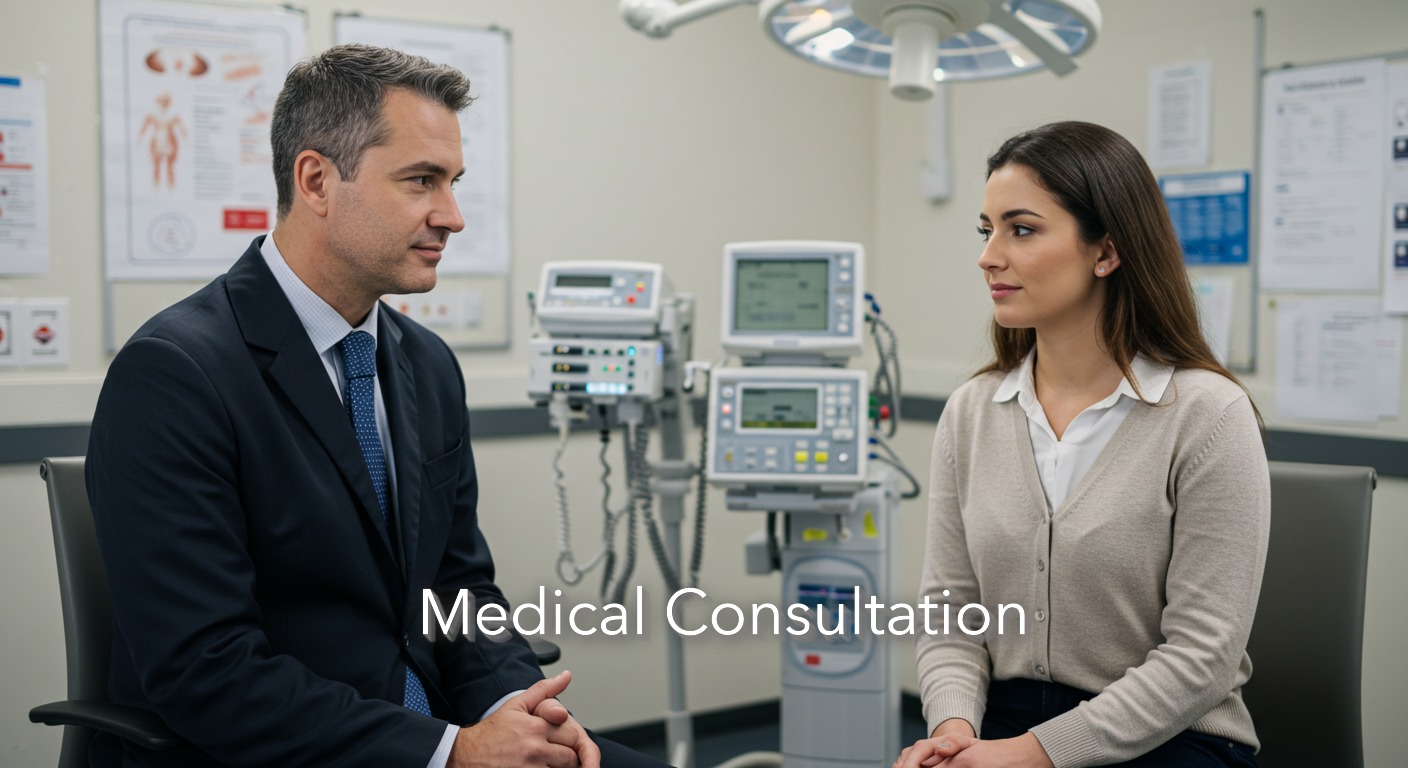
The interaction between an individual and a health professional is most effective when approached as a partnership. It is a dynamic exchange where both parties contribute to the goal of understanding and addressing health concerns. The clinician brings expert knowledge, diagnostic skills, and treatment options, while the individual brings invaluable personal insights into their symptoms, experiences, and circumstances. Viewing the consultation as a collaborative endeavour encourages open communication, mutual respect, and a shared responsibility for health outcomes. This collaborative spirit ensures that explanations are not just delivered, but genuinely understood and integrated into the individual’s perspective on their health.
Beyond the Initial Diagnosis: Ongoing Understanding
For many health conditions, particularly those that are chronic or complex, understanding is not a static endpoint achieved after a single consultation. Rather, it is an evolving process. An initial diagnosis may provide a starting framework, but the aetiology may unfold over time as more information becomes available, as the condition progresses, or as responses to treatment are observed. Continuous dialogue and the willingness to revisit and refine one’s understanding are essential. This ongoing process allows for adjustments to treatment strategies, integration of new insights, and a deeper appreciation of the fluctuating nature of health and illness.
Preparing for Your Consultation
To maximise the effectiveness of a consultation, preparation is highly beneficial. Before attending an appointment, individuals may find it helpful to:
- List symptoms and concerns: Jot down a clear, concise list of all symptoms experienced, including when they started, how frequently they occur, their severity, and any factors that seem to worsen or alleviate them.
- Write down questions: Prepare specific questions regarding the potential diagnosis, aetiology, treatment options, and expected outcomes. Referring to the types of questions suggested in this document can be a useful guide.
- Consider relevant history: Reflect on any relevant medical history, family history of illness, current medications (including over-the-counter and supplements), and significant life events that might be relevant to the current health concern.
- Think about goals: Consider what is hoped to achieve from the consultation, whether it is a clear diagnosis, symptom relief, or a long-term management plan.
This preparation can help ensure that all key points are covered during the limited time available in a consultation and enables a more focused and productive discussion.
What to Expect from a Comprehensive Explanation
A comprehensive explanation from a health professional should move beyond simply naming a condition or describing a symptom. Individuals should expect:
- Clear diagnostic Information: A clear statement of the diagnosis, or the leading differential diagnoses if uncertainty remains, presented in understandable language.
- Discussion of aetiology: An explanation of the likely causes or contributing factors to the condition, acknowledging the multi-factorial nature of many illnesses, particularly in mental health.
- Treatment rationale: A clear rationale for any proposed treatment or management plan, explaining how it aims to address both the symptoms and, where possible, the underlying aetiology.
- Prognosis and expectations: Information regarding the likely course of the condition, what to expect in terms of recovery or management, and potential challenges.
- Opportunity for questions: An explicit opportunity to ask questions and seek clarification, ensuring that the individual feels fully informed and understood.
Receiving a comprehensive explanation supports the individual in making informed decisions about their care and fosters greater confidence in any proposed management plan.
Addressing unhelpful consultations
It is an unfortunate reality that some health consultations may not provide the clarity or comprehensive explanation sought. This can leave individuals feeling uninformed, anxious, and uncertain about their health. While formal complaints processes exist, they can be lengthy and stressful. Fortunately, there are more immediate and less adversarial avenues to pursue when a consultation proves unhelpful in gaining a full understanding of diagnosis, aetiology, or planned investigations.
If a consultation leaves an individual feeling in the dark, consider the following efficient routes for clarification:
- Seeking immediate clarification (if appropriate): If the consultation is still in progress or has just concluded, and a comfort level exists, a direct and polite request for further explanation can be made. For example: “Clarification is needed regarding the potential causes or specific diagnoses being considered, as the understanding is incomplete,” or “Further information on relevant investigations that might be performed would be beneficial.”
- Requesting a dedicated follow-up appointment: If the initial appointment felt rushed, or the information was overwhelming, requesting a specific follow-up appointment purely to discuss the diagnosis, its aetiology, and the proposed management plan can be effective. When booking, it can be stated, “An appointment is required to discuss the diagnosis and aetiology of symptoms, as clarity was not achieved in the previous consultation.“
- Consulting another professional within the same practice/service: Where feasible, arranging an appointment with a different general practitioner within the same practice, or another clinician within the same specialist service, can offer a fresh perspective without immediate escalation outside the current care setting. This approach is often less daunting.
- Communicating in writing for clarification: A concise and polite letter or email to the practice manager or directly to the clinician can be highly effective. The communication should outline what was not understood from the consultation and specifically request written clarification on the diagnosis, potential causes, and the rationale for proposed or omitted investigations. This establishes a clear record of the request.
- Utilising Patient Advice and Liaison Services (PALS): For consultations within hospital settings (e.g., with consultants or specialists), PALS provides an excellent informal route for resolution. These services can often mediate, assist in obtaining clearer explanations from the clinical team, or offer guidance on further steps, all without initiating a formal complaint.
- Considering a second opinion: If attempts to gain clarity through the above methods remain unsatisfactory, seeking a second opinion becomes a pertinent consideration. This may involve discussing with the existing primary care professional the possibility of a referral to another specialist for a new assessment and independent perspective.
These steps aim to facilitate resolution directly with the healthcare provider or within their immediate organisational structure, which generally proves less burdensome for the individual than immediately entering a formal complaints procedure.
Conclusion and takeaway points
This guide highlights a fundamental principle in healthcare: understanding a health condition goes beyond merely describing its symptoms. A comprehensive grasp involves knowing what the condition is (its diagnosis) and critically, why it has arisen (its aetiology). This ‘why’ often involves a complex interplay of factors, especially in mental health. Individuals are encouraged to actively engage in consultations by asking questions that bridge the gap between symptom description and aetiological understanding. This collaborative approach empowers individuals, reduces uncertainty, and leads to more personalised and effective care. A prepared, questioning stance is essential for navigating the dynamic journey of health and illness, ensuring a truly meaningful healthcare experience.
Unfortunately, some doctors do not respond well to inquiries from patients seeking clarity. This is a difficult situation to navigate. It is important for patients not to depart, feeling left in the dark. In such instances, individuals are encouraged to pursue further clarity through direct communication with the clinician or practice, seeking a different professional opinion within the same service, or utilising patient advocacy services like PALS for support.