


Estimated reading time at 200 wpm: 11 minutes
Whether or not you agree our Fat Disclaimer applies
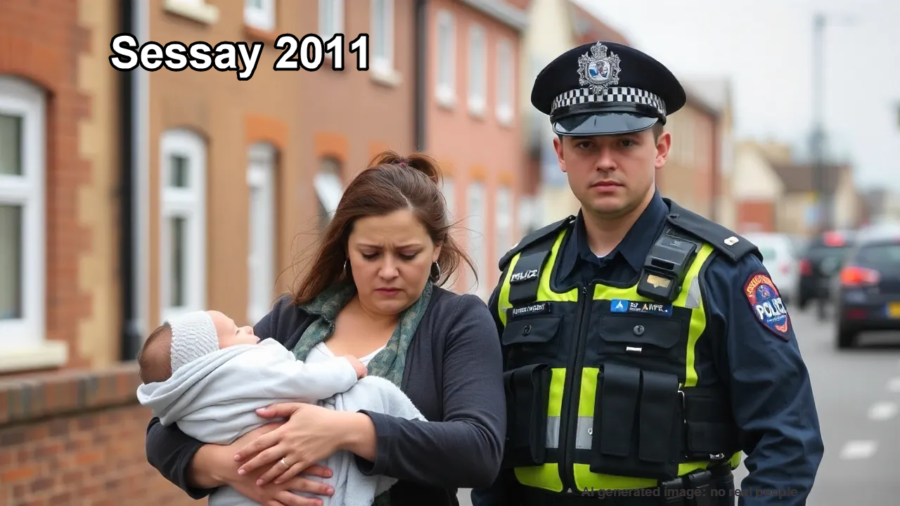
In August 2010, police officers entered the home of Ms Sawida Sessay, prompted by a neighbour’s concern about her welfare and ability to care for her young child. Without obtaining a warrant or consulting mental health professionals, the officers formed a judgment that Ms Sessay appeared mentally disordered and took her, along with her child, initially to Peckham police station. After her child was placed into police protection, the officers transported Ms Sessay to the Maudsley Hospital, specifically into the hospital’s designated “136 Suite.” Rather than relying on the Mental Health Act 1983 (MHA), the officers invoked the Mental Capacity Act 2005 (MCA), despite lacking appropriate legal justification under the circumstances.
What followed was a detention lasting some thirteen hours, during which Ms Sessay awaited psychiatric assessment and a formal decision regarding compulsory admission under the MHA. Her subsequent legal challenge, explored comprehensively by the High Court in R (Sessay) v South London & Maudsley NHS Foundation Trust & Commissioner of Police for the Metropolis [2011] EWHC 2617 (QB), confronted a critical issue at the intersection of statutory mental health legislation and common law principles: could NHS staff and police lawfully rely on common law powers of necessity to detain mentally disordered individuals outside the explicit provisions of the Mental Health Act?
The court’s judgment, significant both in clarity and implications, rejected any notion of residual common law detention powers, emphasising Parliament’s intention that the MHA alone should govern the compulsory admission and detention of non-compliant individuals experiencing mental disorders. In affirming the exclusive authority of statutory law, the ruling underscored profound implications for police practice, NHS Trust policy, and the rights of individuals detained in circumstances of mental health crisis. This paper examines the legal reasoning, implications, and enduring significance of the Sessay judgment within mental health law in England and Wales.
At the hospital, Ms Sessay was placed in a “136 Suite” used for patients brought by police under MHA powers. She remained there for approximately 13 hours awaiting assessment and formal compulsory admission under section 2 of the MHA. Ms Sessay claimed her treatment amounted to unlawful detention and deprivation of liberty under Article 5 ECHR and false imprisonment under common law.
The court held:
- Exclusivity of MHA powers: Sections 135 and 136 of the MHA exclusively govern the powers of police to take mentally disordered persons to a place of safety. Sections 5 and 6 of the MCA do not authorise police to remove individuals for mental health assessment in the same context.
- Detention: Ms Sessay was unlawfully detained by the police and the NHS Trust, breaching her Article 5 rights and constituting false imprisonment.
- Comprehensive nature of MHA: Part II of the MHA provides a comprehensive statutory code for compulsory hospital admissions. The court rejected reliance on the common law doctrine of necessity to detain non-compliant patients pending MHA assessments.
- Trust’s policy: The Trust’s policy of aiming to hold patients in the “136 Suite” no longer than eight hours (ideally four hours) pending assessments was lawful if implemented properly without undue delay.
The judgment concluded that Ms Sessay was entitled to a declaration of unlawfulness, damages for breach of Article 5 ECHR, and false imprisonment.
Details of arrest and transfer
Ms Sawida Sessay was taken into custody by two police officers on 7 August 2010, following a complaint from a neighbour regarding concerns about her ability to care adequately for her child. The police officers entered her private accommodation without a warrant or the accompaniment of mental health professionals, having formed a view that she appeared mentally disordered and posed a risk to herself and her child. Believing they were acting in her best interests, they took her and her child initially to Peckham police station. At the police station, her child was taken into police protection.
Following this, the police officers then transported Ms Sessay onward to the Maudsley Hospital. Upon arrival at approximately 09:20, the officers took her directly to the hospital’s “136 Suite,” a designated area typically reserved for individuals detained by police under sections 135 or 136 of the Mental Health Act 1983. However, the police had incorrectly relied upon sections 5 and 6 of the Mental Capacity Act 2005 for authority to transport her, as they lacked the necessary warrant or mental health professional required under the MHA.
Thus, although placed in the “136 Suite,” Ms Sessay had not been lawfully detained under section 136 MHA. She subsequently remained in this suite for approximately 13 hours while awaiting formal assessment and admission procedures under section 2 MHA. It was the 13-hour period of her detention that was contested.
“The officers considered that the Claimant was a person who fell within the scope of s.135 MHA, but they could not exercise that power because they did not have a warrant and were not accompanied by an approved mental health professional or a registered medical practitioner, as would have been required under s.135. Instead, the officers relied upon s.5 Mental Capacity Act 2005 (“MCA”) to justify taking the Claimant to hospital. On arrival at the hospital, the officers took the Claimant to what is known as the “136 Suite” to which persons brought in by the police under s.135 or 136 MHA are taken.” 1
Reasoning of the Court
The Court’s detailed reasoning is structured around several key legal and factual findings:
Exclusivity of the Mental Health Act (MHA):
The court determined that the Mental Health Act 1983 provides a comprehensive and exhaustive statutory framework for the compulsory detention of mentally disordered individuals. It expressly rejected the argument from the NHS Trust that there existed a gap or “lacuna” in the law that could be filled by the common law doctrine of necessity. The court referred explicitly to the earlier House of Lords judgment in B v Forsey [1988], emphasising that Parliament intended the statutory scheme (sections 2, 4, 135, and 136 MHA) to be exhaustive. Therefore, any reliance on common law powers of detention in these circumstances was inappropriate.
Unlawful reliance on Mental Capacity Act (MCA):
The court highlighted that sections 5 and 6 MCA do not authorise police officers to remove individuals to hospital as a substitute for the specific powers provided by sections 135 and 136 MHA. It was explicitly stated that the police officers, acting without a warrant and not accompanied by appropriate mental health professionals, had no lawful authority under MCA to detain Ms Sessay and take her to hospital.
Finding of detention and deprivation of liberty:
The court clearly found that Ms Sessay had been detained, based on the evidence that she could not leave the “136 Suite” unassisted, and hospital staff understood her to have been detained under section 136 MHA. The completion of formal documentation informing her that she was subject to detention further evidenced that she was not free to leave.
No lawful justification:
Since the police had improperly used MCA powers, the Trust staff’s subsequent detention of Ms Sessay was also unlawful. The court explicitly concluded that, regardless of whether lawful detention under MHA sections 2 or 4 might theoretically have been possible, the actual circumstances and legal bases invoked rendered the detention unlawful. The court rejected arguments attempting retrospective justification under different powers of the MHA.
Delays in assessment:
The judgment criticises the delay of approximately 13 hours in formalising detention under section 2 MHA. The court pointed to multiple periods of unjustified delay by medical staff in assessing Ms Sessay, especially noting an unexplained delay of around 3.5 hours between completion of medical recommendations and formal admission. These delays were significant factors in the finding of unlawful detention and deprivation of liberty.
Compatibility with Article 5 ECHR:
The court found a clear breach of Article 5 of the ECHR due to unlawful detention. Referring to European Court jurisprudence, including the case of HL v United Kingdom, the judgment emphasised that any deprivation of liberty must follow clear, prescribed procedures and safeguards established by law. Since the procedures followed here were neither correct nor lawful, the requirements of Article 5 were breached.
Conclusion of the Court:
Ultimately, the judgment explicitly concluded that Part II of the Mental Health Act provides a comprehensive and exhaustive statutory code for such compulsory admissions, that the common law doctrine of necessity does not apply in this context, and therefore, Ms Sessay’s detention was unlawful and breached Article 5 ECHR. The court approved the draft consent order between the Claimant and the Commissioner of Police and found the Trust’s general policy lawful provided it is appropriately implemented without undue delay.
Specific focus of Sessay, on B v Forsey 1988
The court’s analysis at paragraphs 40 to 41, relating to the case of B v Forsey [1988], forms a critical part of its reasoning regarding the comprehensive nature of the Mental Health Act 1983 (MHA). Click to learn more.
In paragraphs 40 to 41, the court closely examined the House of Lords’ decision in B v Forsey, a case involving the Scottish equivalent of the Mental Health Act—the Mental Health (Scotland) Act 1984. In Forsey, the issue was whether hospital authorities possessed any residual common law power to detain a patient beyond the explicit statutory provisions. The House of Lords concluded firmly that the Scottish Act provided a complete statutory framework for the detention of mentally disordered persons, leaving no scope for residual common law powers of detention.
The court specifically highlighted Lord Keith’s observations in Forsey, who emphasised that the statutory provisions of the Scottish Act were exhaustive and complete. Lord Keith considered that the detailed procedures laid down in the Act—for emergency, short-term, and long-term detention—were deliberately structured and comprehensive. Crucially, he stated that it was inconceivable Parliament intended for hospitals to retain common law powers when such detailed statutory safeguards had been explicitly set forth. The existence of statutory safeguards was viewed as explicitly ruling out the possibility of residual common law powers.
The court in Sessay explicitly rejected the Trust’s attempt to distinguish Forsey. The Trust had argued that Forsey was different because it addressed circumstances where Parliament specifically legislated against certain actions. However, the court found no relevant distinction. It emphasised that Lord Keith’s reasoning in Forsey—about Parliament having comprehensively legislated to the exclusion of common law powers—was equally applicable to the Mental Health Act in England and Wales.
Thus, paragraphs 40-41 in the judgment are central to the court’s rejection of the argument that there existed a lacuna in the MHA which could be filled by common law necessity. Instead, the court affirms explicitly that the reasoning in Forsey applies equally here, concluding firmly that any gaps or shortcomings in the statutory scheme are matters for Parliament to resolve, not the courts through common law.
Relevance to S136
The court explicitly held that the Mental Health Act 1983 (MHA) provides an exhaustive legal framework for the compulsory detention and treatment of individuals with mental disorders. The judgment categorically rejected reliance on common law doctrines—such as necessity—to justify detention or treatment where statutory powers (e.g., sections 135 or 136 MHA) had been exhausted or were not available.
The decision in Sessay is particularly clear at paragraphs 40-41, affirming that any “gap” or “lacuna” identified within the statutory provisions is a matter for Parliament alone, not something to be remedied through common law. The judgment strongly implies that invoking common law powers in circumstances explicitly governed by the MHA (such as after a section 136 has expired) is unlawful.
Therefore, based strictly on the reasoning of the court in Sessay, an NHS Trust invoking common law powers after the statutory limit of section 136 MHA has expired—would not align with this legal precedent. The court explicitly stated that such reliance would not only lack lawful authority but also potentially amount to a breach of Article 5 ECHR and false imprisonment.
Given the clarity of this judgment, there is currently a significant legal misunderstanding or misapplication by NHS Trusts nationally (at 21/03/2025). Sessay having confirmed Black v Forsey 1988, sets a strong precedent that detention beyond statutory limits must rely strictly on the clear statutory provisions of the MHA.
Conclusion
The Sessay case clarifies important points about mental health law. It confirms that the Mental Health Act provides the only legal authority to detain people experiencing mental health crises.
Police cannot lawfully use other laws, like the Mental Capacity Act, to detain someone who appears mentally unwell.
Likewise, NHS Trusts and hospitals cannot rely on common law (or general principles of necessity) to hold someone beyond the powers explicitly given by law. This includes situations where time limits, such as the 24-hour maximum detention under Section 136, have expired. If hospitals or police continue detention after this period without proper legal authority, they act unlawfully.
The judgment reminds authorities that any gaps or problems with the law must be addressed by Parliament, not by stretching existing laws. In short, once the clock runs out on powers like Sections 135 or 136, hospitals cannot legally extend detention using common law.