


Estimated reading time at 200 wpm: 5 minutes
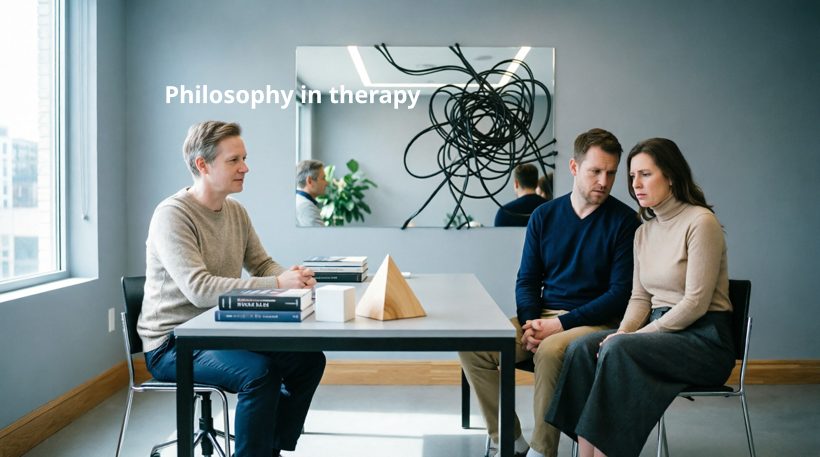
The Royal College of Psychiatrists’ Philosophy Special Interest Group (SEPSIG) is preparing for an online session on 29 April 2026. The billing is impressive: a Socratic dialogue featuring some of the most distinguished minds in the field—Professor Femi Oyebode and Dr Andrew Hodkiss among them. The goal is to “bridge the gap” between academic phenomenology and the “real-world needs” of mental health professionals. [To be read with: Psychiatry held together by Fragile Sutures].
Whether or not you agree our Fat Disclaimer applies
On paper, it is the kind of intellectual prestige that defines psychiatry’s identity as the “thinking person’s” medical specialty. But for those currently standing on the treadmill, beneath which the hot coals are actively burning, the session feels less like a bridge and more like a mirage.
As this session approaches, I must ask whether these academic pursuits are serving the frontline, or whether they have become the “aesthetic varnish” for a profession in systemic collapse.
Whereas –
- SEPSIG will attempt to define phenomenology and provide a brief history and focus on two key aims: translating phenomenological concepts into practical clinical applications, and bridging the gap between academic approaches to phenomenology/psychoanalysis and the real-world needs of mental health professionals – the clinical post-COVID reality that is Psychiatry is operating under an industrialised, high-throughput assembly line where deep subjective inquiry is treated as an affordable operational failure to the spreadsheet;
- in the post-COVID world, it is customer (aka service user) first; with professional standards (audited by no one) taking a back seat . The customer wants their diagnoses and they want it fast, especially ADHD. And they in large numbers, want their ‘chemical baskets’ on time, tangibly, with underlying motives at the DWP.
- academic phenomenology increasingly risks becoming a ‘refuge of the elite’—a contemplative hobby for those who have already ascended the career ladder, while those at the bottom are being crushed higher decision-making structures;
- these prestige frameworks function as a powerful ‘recruitment hook,’ luring medical students and trainees with the promise of humanistic inquiry only to abandon them to the ‘hot coals’ of risk-assessment-by-numbers and administrative attrition—a failure of oversight and clinical depth made tragically manifest by the evidence emerging from the Nottingham and Southport inquiries;
- focusing on the finer points of philosophical navigation has the appearance of something performative while the actual ship of UK clinical psychiatry—burdened by a true consultant vacancy rate of 27-28% [RCPsych Workforce Census 2025, published March 2026]—is sinking.
- after 25 years of the College’s advocacy, influence on structural change remains glacial, and there is little hard evidence that such efforts have staved off the “dire straits” identified in the Darzi report [Independent Investigation of the National Health Service in England, 2024]; to promote time-intensive frameworks in this context ignores the material decay of the services where they are meant to be applied.
Questions for SEPSIG
In the spirit of the “Socratic fashion” promised by the session, I submit the following questions to the panel and the College:
- At what point does the promotion of philosophical and psychoanalytic frameworks stop being a legitimate clinical tool and start becoming a form of “intellectual gaslighting”? Is it ethical to lure fresh recruits with the promise of humanistic inquiry only to deploy them as components in a high-speed triage machine designed to prevent it? Is SEPSIG bridging a gap, or is it unwittingly providing the “aesthetic varnish” for a profession in systemic collapse?
- Who is phenomenology actually for in a collapsing system? Is it a practical tool for the overworked ward doctor on the treadmill, or is it a luxury hobby for those who have already climbed the ladder and no longer operate at the high-throughput interface?
- How can the panel reconcile the promotion phenomenology and related concepts, in a system that treats the time required for their use as an operational failure? Is there a point where ‘translating concepts’ becomes a distraction from the urgent need to address the structural decay that makes such concepts impossible to apply?
- Given that the College’s advocacy for structural change has yet to produce measurable relief on the frontline, how can SEPSIG justify promoting these time-intensive humanistic frameworks within the current system? Does this not risk losing a new generation to a system that has structurally forced the profession to abandon its humanistic soul?
- The ship is sinking—is this the right time to be educating on the aesthetic arrangement and composition of deck chairs?
Conclusion
To be clear: the argument here is not that SEPSIG should abandon the study of phenomenology, nor that such pursuits are without intrinsic value. Education in these frameworks remains a legitimate and necessary academic pursuit for any profession that claims to treat the human mind.
However, we must confront the reality that these intellectual depths are being drowned out by a deluge of structural issues. When a profession celebrates its philosophical soul while its body is being systematically dismantled by industrialised attrition, the philosophy ceases to be a guide and begins to look like a fanciful distraction. If SEPSIG wants to teach a new generation how to understand phenomenology of patients, it must anchor itself in the reality that deep systemic issues in health services are unlikely to afford the advantages of such an education.
I wait to see if the “Socratic dialogue” will have the courage to address the industrial reality of the floor, or if it will remain safely tucked away in the symbolic space of the elite.
This post originally appeared on investigativepsychiatry.com